Put simply: STAR helps someone map the turning points of their life and find new meaning in them.
STAR is a guided, visual, and story-attentive process designed to help participants identify chaos moments, recognize patterns, and reframe pivotal experiences that have shaped them. Through tactile boards, reflective prompts, sensory engagement, and one-on-one facilitation, STAR establishes a supportive environment where wounds and scars can be acknowledged and witnessed without shame.
Rooted in semiotics and a listening, attentive presence, STAR facilitates a process of re-storying. Semiotics recognizes how meaning is already being communicated through signs and patterns. Culture provides the context in which that meaning is formed, conveyed, and comprehended, while ministry brings attentive presence, spiritual discernment, and the possibility of seeing God at work within a person's lived story. Through this process, participants may begin to recognize meaning, dignity, beauty, and presence within their narrative experiences as they move toward renewed identity, connection, and purpose.
STAR partners with organizations whose programs stabilize lives. Reentry, recovery, housing, family services — these meet the urgent needs. STAR adds what stabilization alone cannot: structured, facilitated story work.
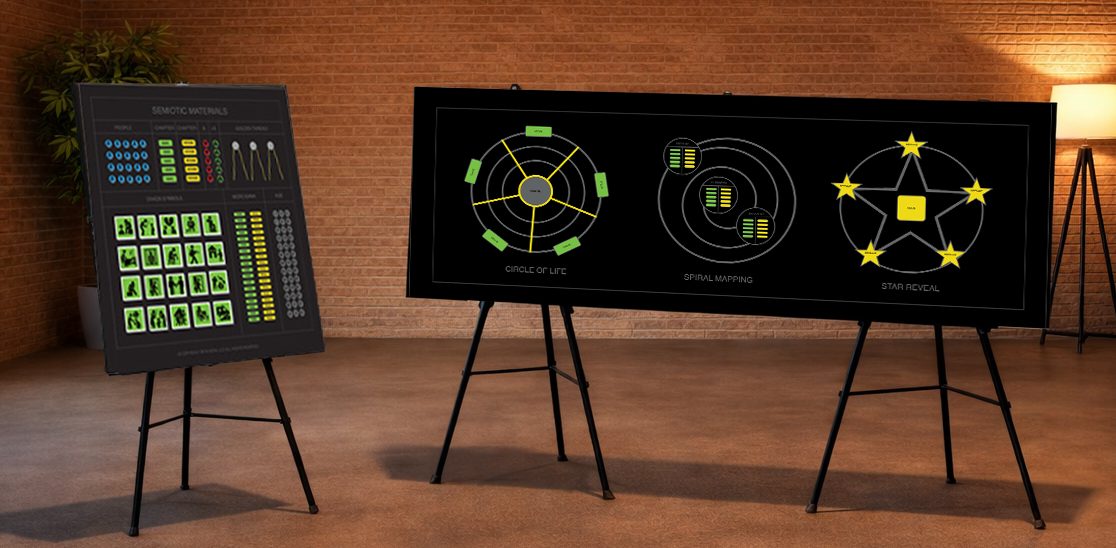
A person sits with a trained guide and uses hands-on boards — a circle, a spiral, and a star — to lay out five turning-point moments from their life. Together they trace the patterns, give those moments new names, and see the whole story in a new light. One guided session, one-on-one, at the person's own pace.
Rather than treating a life story as a series of disconnected chapters, STAR creates conditions in which meaning can be recognized through sensory, attentive engagement.
S.T.A.R. is a complete experience, moving through three stages: the identification of participant-defined chaos moments, a spiral mapping journey that supports interpretive clarity and reframing, and a culminating star-shaped mapping practice that brings patterns, witnesses, and renewed language into view. The methodology is designed to be both disciplined and adaptable — the same structure holds diverse life stories while honoring participant agency and consent.
The S.T.A.R. Methodology — Semiotic Tracing, Attunement, and Reframing — is grounded in Christian theological commitments regarding personhood, story, dignity, and formation. Human life is understood as more than a sequence of events; it is a lived narrative held within God's authorship and sustained within relationships of witness and withness. Within this framing, memories are treated as meaningful, language as formative, and reflection as a disciplined practice of attention rather than a search for explanations or outcomes. The methodology engages story as a site of sacred significance, where lived experience may be named with honesty, held with care, and interpreted with theological orientation.
S.T.A.R. organizes the participant journey through these three core practices, each expressed through tangible artifacts and facilitated presence. The process remains visual, sensory, relational, and participant-paced throughout.
STAR does not generate meaning for participants nor impose an interpretation onto their narratives. Instead, it facilitates the creation of conditions where meaning can be recognized.
Interpreting the signs inherently present within a person's lived experience — the symbols, patterns, and signals their story has carried.
Following the thread of a life story — its phases of fragmentation, recurring themes, and relational patterns — without imposing premature conclusions.
Sensory and attentive presence — taking the time to recognize what a life has carried beneath adaptive behaviors, coping mechanisms, and the accumulated weight of lived experience.
Holding the narrative with new language — not erasing what transpired, but acknowledging its significance, dignity, and the calling within what has been endured.
Many programs appropriately focus on immediate needs — housing, employment, sobriety, and safety. STAR addresses a complementary requirement: the meaning, memory, identity, and spiritual awareness intrinsic to lived experience.
STAR guides participants through contemplative inquiry to observe what their lives bear the weight of. Through witnessing, listening, sensing, and guided reflection, participants articulate what has previously gone unnamed.
The objective is not rapid inspiration or forced resolution. STAR invites participants to see their narrative with vivid perception — with dignity, agency, and spiritual attentiveness, on their own terms.
This process has changed how I see myself on the inside.
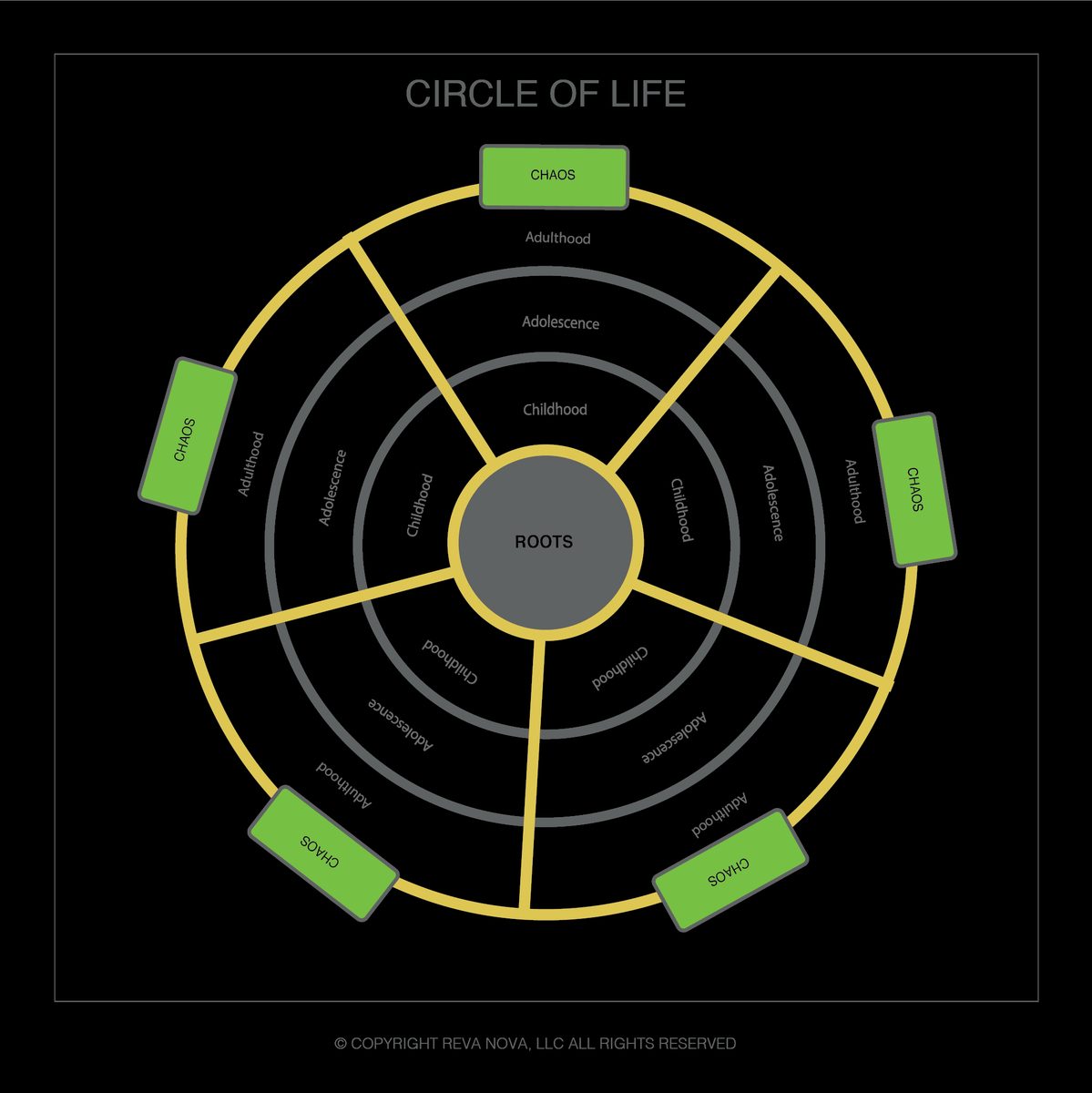
The Circle of Life board functions as the initial inventory. Participants identify five chaos moments that left a mark and shaped how they see themselves, others, or the world.
Using visual markers, participants recognize individuals, locations, ages, landscapes, and initial impressions associated with these moments. This first movement does not require participants to process everything simultaneously. It facilitates the collection of story fragments and enables them to begin perceiving what has been preserved.
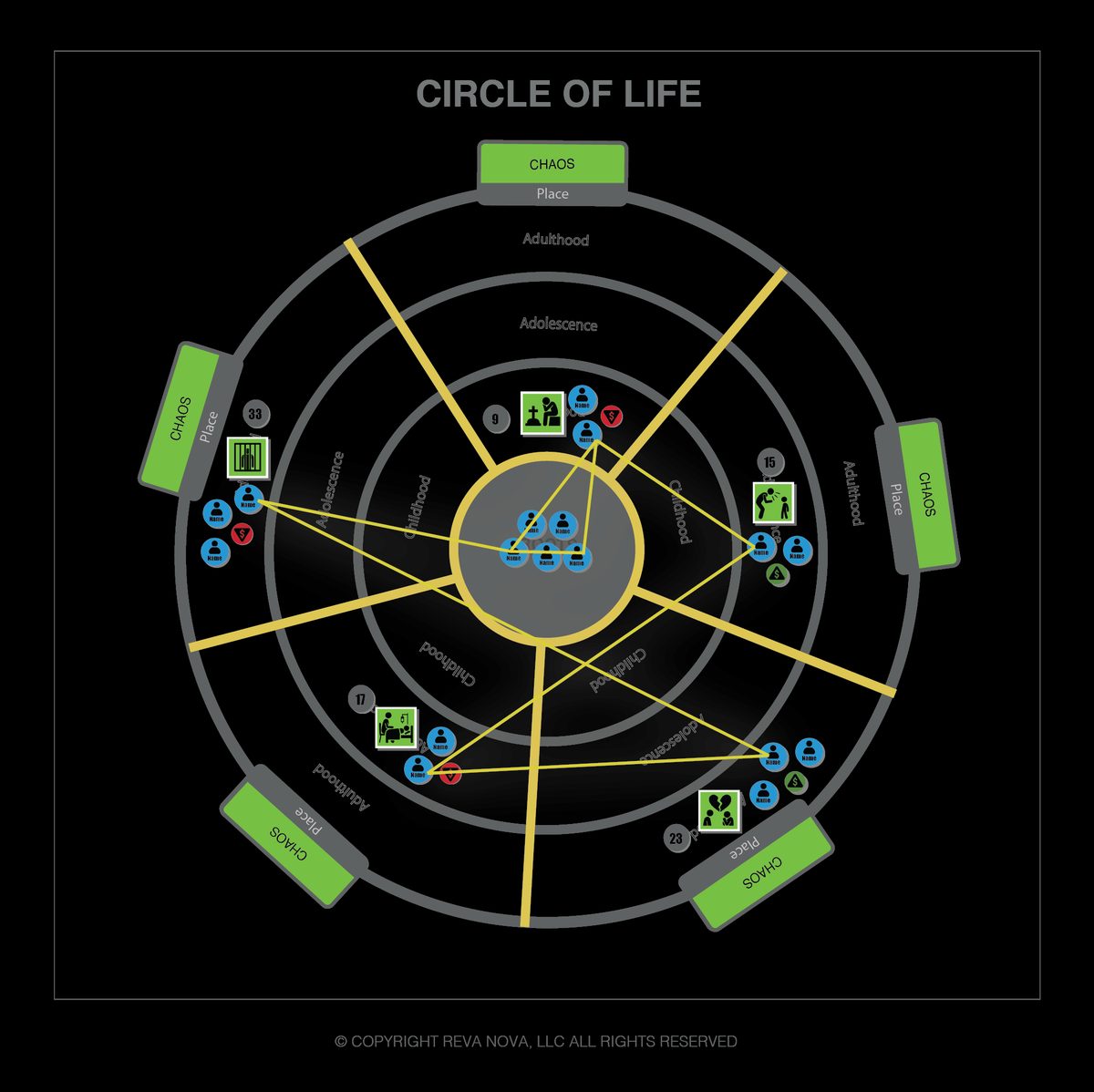
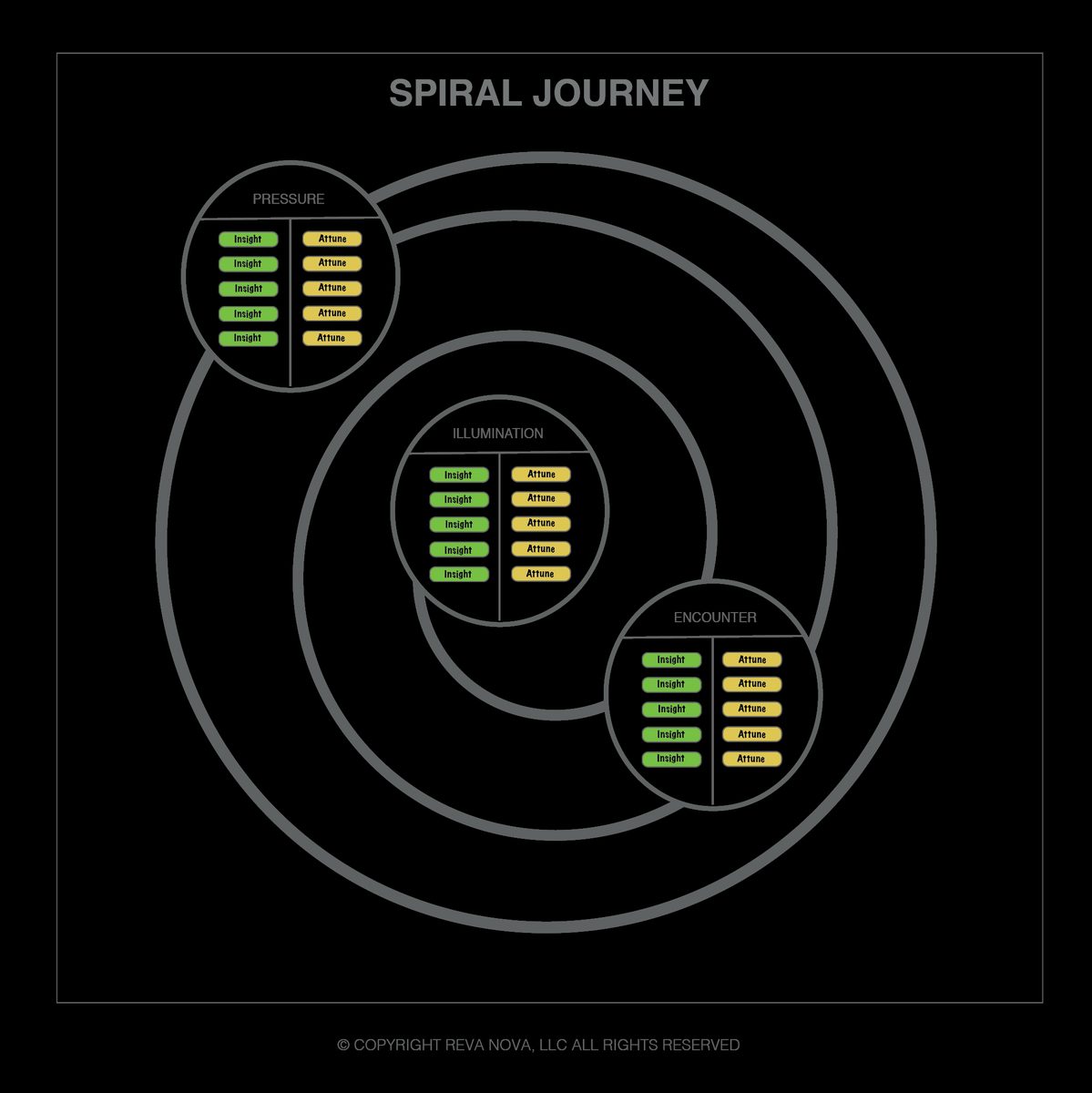
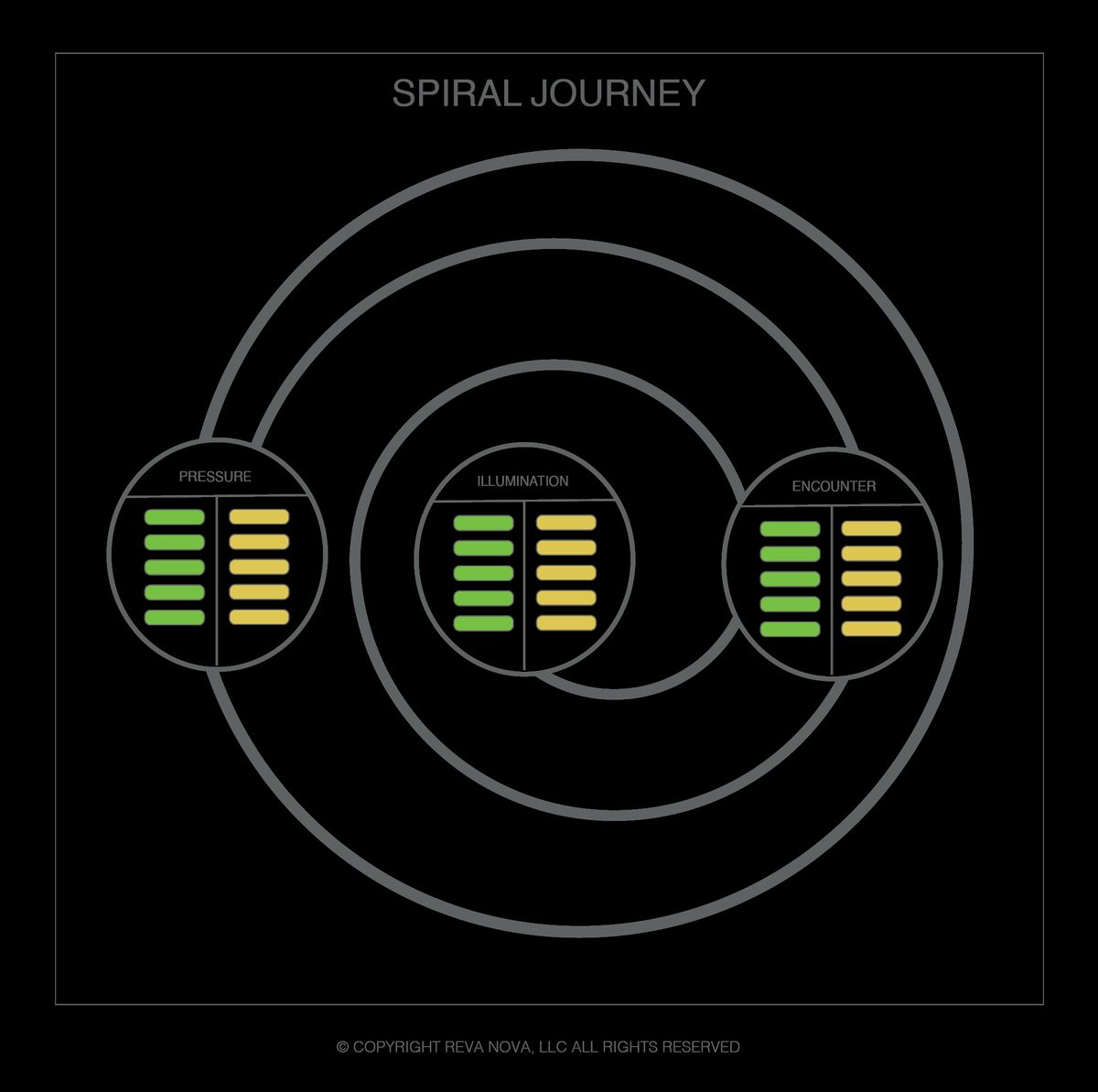
The Spiral Board is the processing movement. Participants bring their identified chaos moments into a structured journey through pattern recognition, pressure, encounter, illumination, and renaming. A word bank featuring paradoxical pairings is provided for participants to draw from.
As the narrative progresses inward, participants observe recurring themes, emotional states, relational wounds, and subtle indicators of capacity. The Spiral holds tension without forcing immediate resolution, allowing reframing to emerge through supported attention.
This movement is grounded in attunement. The facilitator does not direct or interpret the participant's narrative but remains present as a witness — guiding participants to attune and perceive what begins to surface.
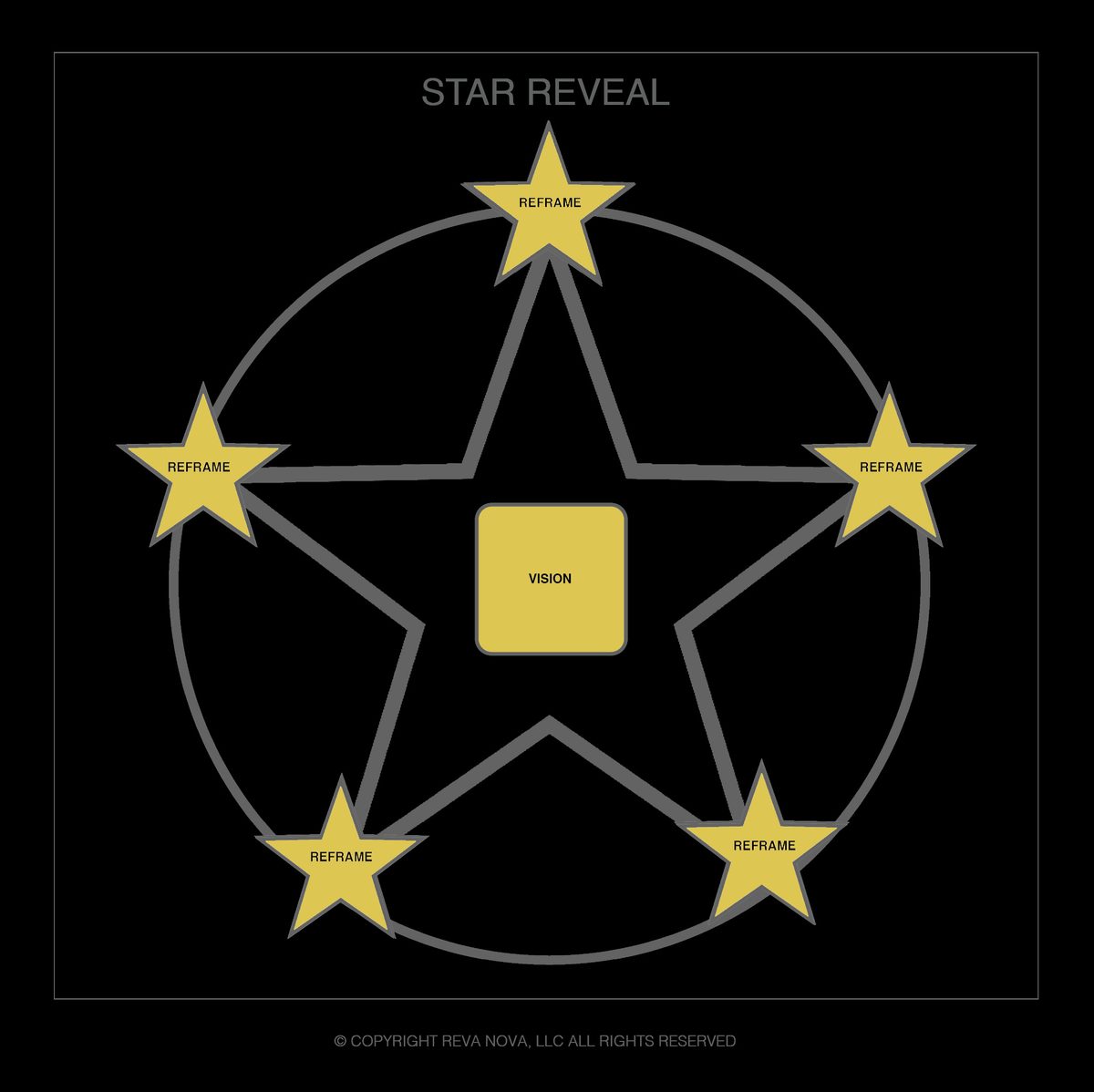
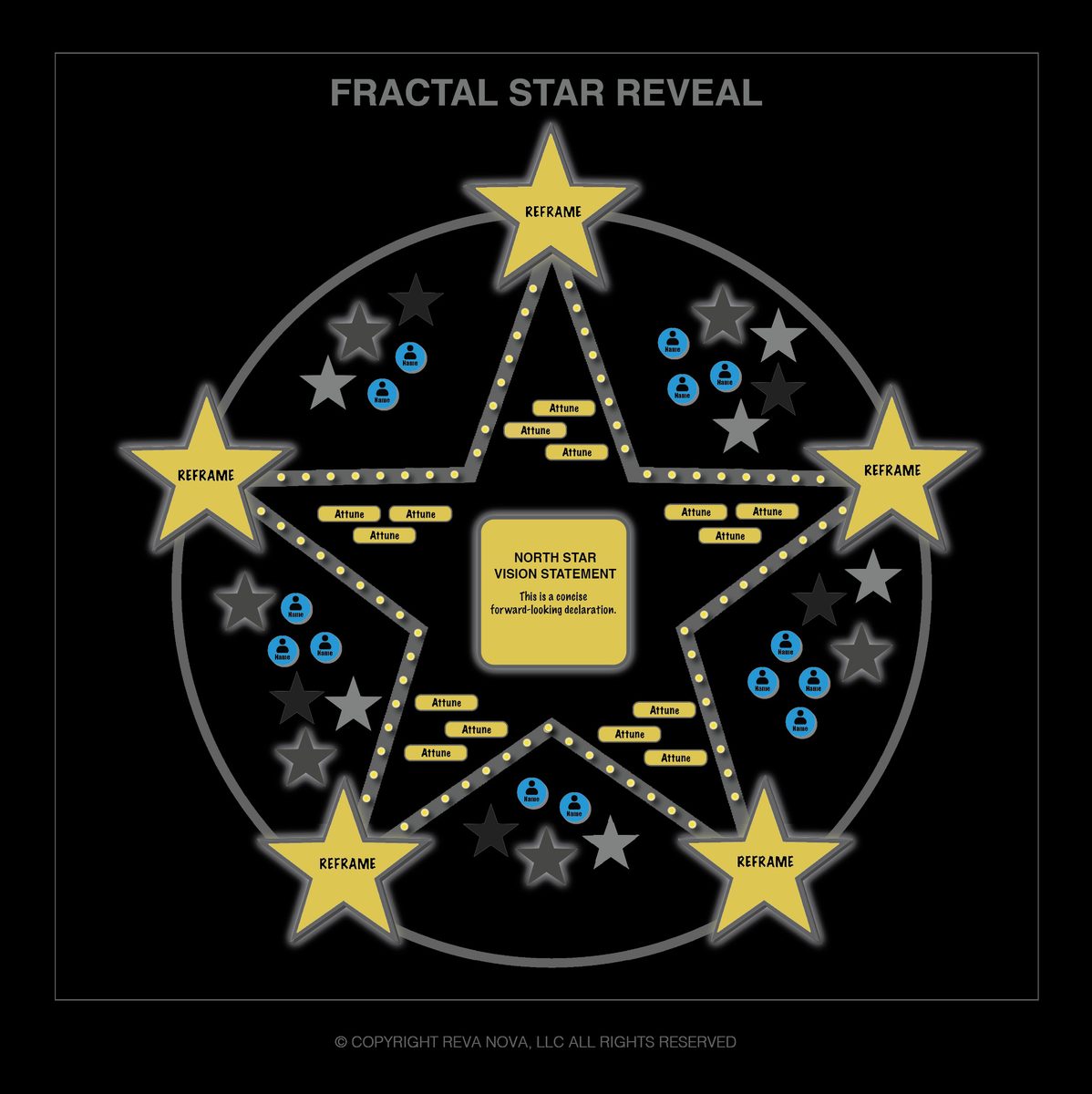
The STAR Reveal is the culminating movement. Renamed chaos moments are placed at the vertices of a star, and connections are mapped among them. Threads, light, and visual markers reveal patterns that were previously concealed.
What initially appears as isolated chaos begins to coalesce into a comprehensive narrative. The STAR Reveal helps participants recognize beauty, significance, and presence in what they have experienced. It serves as a visible witness to the reframed story, featuring a North Star vision statement formed from the renamed chaos-moment titles.
The original designation is not erased. The wound is not dismissed. Instead, the participant is invited to reframe the narrative using refined language, with renewed dignity and a clearer sense of identity, witness, and calling.
Unlike approaches that begin by asking what is wrong, STAR begins by asking what has never been mapped — tracing the signs already present within a life.
STAR does not impose conclusions. It fosters an attentive environment in which participants recognize patterns, reframe formative moments, and begin to see their story as a counter-narrative.
STAR attends to signs, symbols, memory, meaning, and the presence of God within lived experience — embodied, visual, and relational, engaging perception beyond mere words.
Its uniqueness lies in the integration of visual storytelling, embodied memory, pattern recognition, narrative reframing, spiritual attentiveness, and one-on-one facilitated presence.
STAR is best suited for individuals ready to give their story closer attention — and for the organizations that walk with them. STAR serves those who benefit from a visual, sensory, and relational process of meaning-making.
STAR is not meant to replace existing programming. It is designed to expand and enhance it — moving participants beyond immediate stabilization into deeper reflection and a reframed sense of identity.
It builds on the relational groundwork an organization has already laid — accompanying an organization's relational capacity and giving participants a visual, sacred, and practical way to engage their story with new perception.
Every story begins somewhere, but not every person has been given the freedom to name — or rename — the chaos that has shaped their journey. STAR was created to open that space: to let participants reframe those experiences with greater agency, while remaining attentive to the larger story God may be revealing within their lives.
For many people shaped by incarceration, addiction, broken family roots, or other forms of adversity, rehabilitation is not a blank page. It is a return to unfinished sentences and stories in which hardship has often written the next cue. Yet no story carries only one meaning. Within the chaos, another narrative is always present, waiting to be recognized and traced.
STAR was built on the conviction that people carrying fractured storylines might begin to see beauty within chaos, reframe the narratives that have shaped them, and become more attentive to the presence of Jesus within their lived experience. Through guided storytelling, semiotic interpretation, and sensory engagement, participants are invited to recognize patterns, reframe pivotal experiences, and encounter the Way, the Truth, and the Life within their own stories.
Like the birth of a star, meaning may emerge through pressure and turbulence. Against the darkness, the story can begin to reveal a different shape in a new light.
STAR was developed and field-tested in partnership with DADS — Divine Alternatives for Dads Services, a faith-based nonprofit serving fathers, families, and individuals impacted by incarceration and reentry.
Within the DADS context, STAR was designed as a next-step methodology to accompany existing fatherhood classes and reentry support — helping participants move from stabilization into narrative reframing and a renewed sense of identity.
STAR honors the trust, relational presence, spiritual formation, and voluntary return already present in nonprofit and ministry programs. It is not intended to replace existing work. It is designed to expand and enhance it.
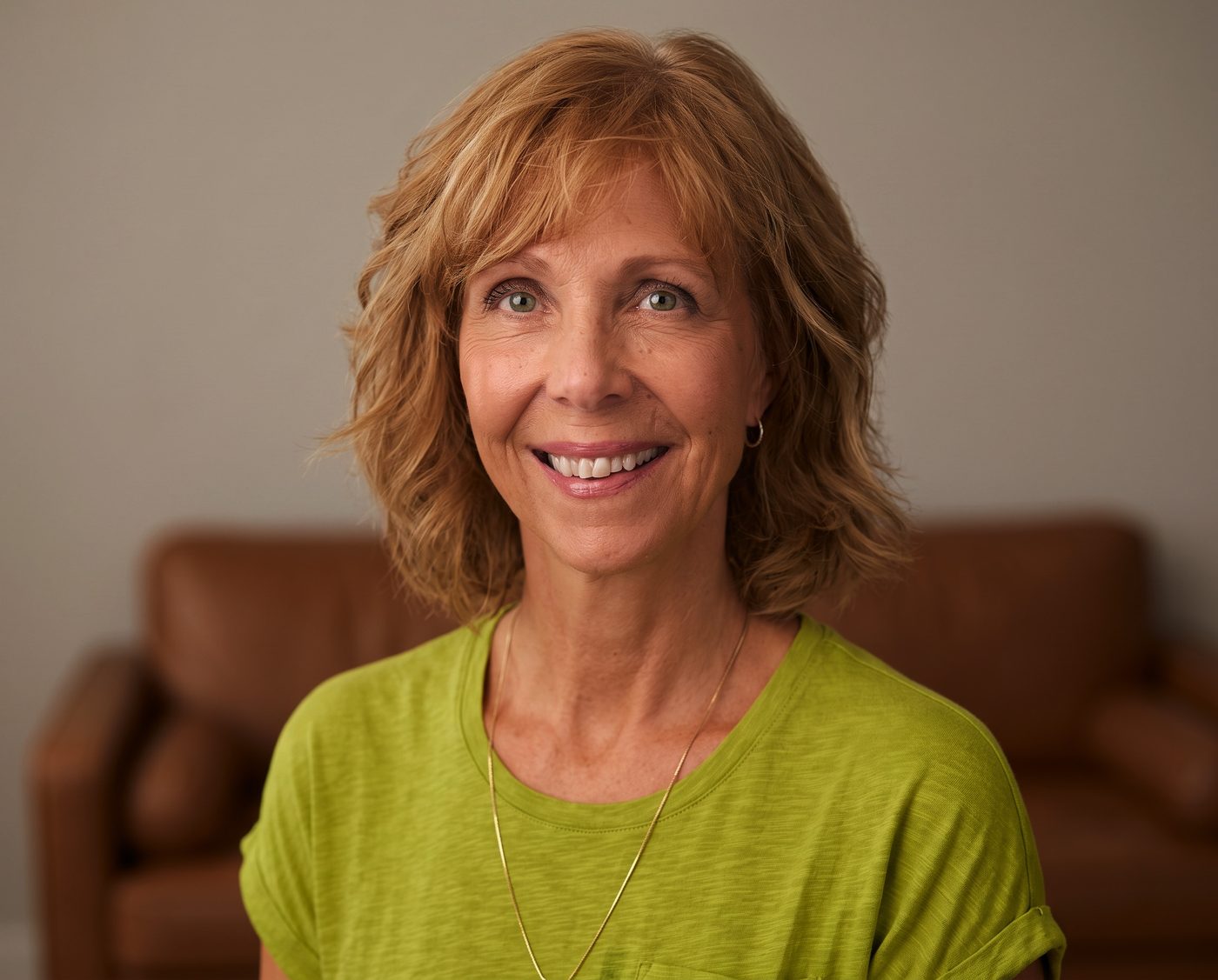
Debra Jacobsen is a mother of five and a grandmother to many. She and her husband have been married for forty-four years. She earned her master's degree at fifty-seven and her doctorate at sixty-four. She has personally facilitated every STAR experience through its pilot stage and is now preparing to train and certify others in the methodology.
Before words exist, meaning is already present in rhythm, memory, and breath — waiting to be recognized and drawn back into a story. This conviction shapes her scholarship, which brings together Scripture and personal narrative: that significance is discerned within tension, through connection, recognition, and the gradual ability to give voice to what has shaped us. STAR grew from that conviction. It trains sustained attentiveness within chaos, so that meaning may emerge with integrity over time.
STAR partners with nonprofits, ministries, reentry initiatives, recovery programs, restorative justice entities, mentoring programs, and community organizations already walking with people in seasons of fracture, disruption, and survival.
STAR can be implemented as a one-on-one facilitated experience alongside programs that already exist — following a fatherhood class, within a reentry support plan, as part of recovery programming, or as a reflective next step for participants ready to give their story sustained attention.
Partnership may include:
Tell us about your program and the people you serve. We will follow up with information on facilitator training, implementation, and the potential structure of a grant-supported partnership.
The STAR Methodology gives voice to the mystery of how meaning is formed at the intersection of chaos, constraint, and possible divine encounter. A sign becomes a semiotic force that disrupts, reveals, and reconfigures the contours of a life. The moments that feel most disorienting often carry the most formative invitations toward recognition, attunement, and reframing.